Have you ever wondered if teaching math to your little one has to be all flashcards and frustrating drills? As a parent and an educator who has seen firsthand the magic of early learning, I’m here to tell you it absolutely doesn’t!
We’re living in a fantastic era where early childhood math education is transforming, moving away from rote memorization and embracing a world of playful discovery.
Forget the outdated notions of math being a chore; it’s about igniting a lifelong love for numbers, shapes, and problem-solving, right from their earliest years.
The latest trends, which I’ve been researching extensively, show that integrating STEM concepts and utilizing innovative digital tools are not just buzzwords – they’re game-changers.
Imagine your child building a tower with blocks, counting aloud, or even engaging with a captivating educational app. These aren’t just fun activities; they’re foundational steps toward critical thinking, logical reasoning, and even future career success in our increasingly tech-driven world.
By making math a joyful adventure, we’re not just teaching them to count; we’re empowering them with confidence and curiosity that extends far beyond the classroom.
I truly believe that fostering a positive relationship with math now is one of the greatest gifts we can give our children, helping them to embrace challenges with enthusiasm instead of anxiety.
Ready to unlock some incredible strategies and resources to make early math an absolute blast for your little learner? Let’s dive into the details and uncover some amazing tips!
Making Math Magical Through Playtime

When it comes to introducing math to little ones, I’ve always found that the most effective approach isn’t about rigid lessons or flashcards, but rather about transforming it into an exciting adventure during playtime.
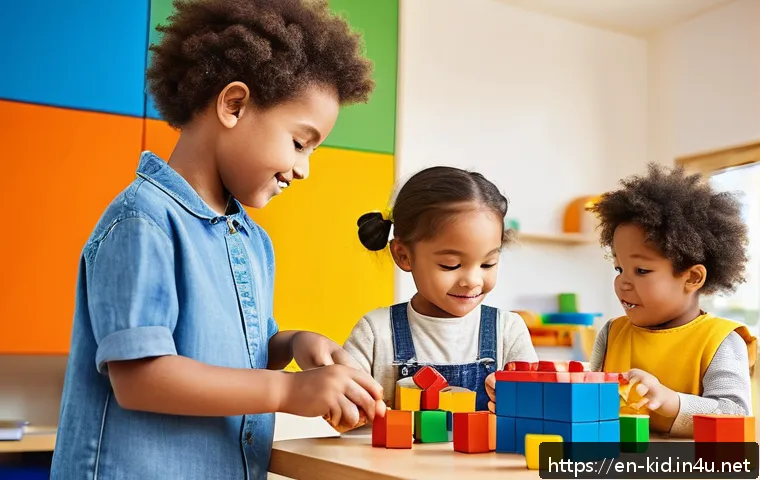
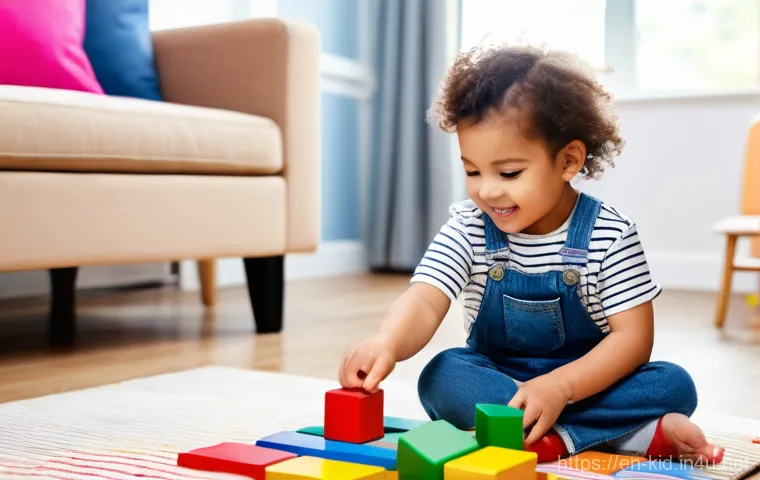
From my own experience, and what I’ve consistently observed in children, kids learn best when they’re genuinely engaged and having a blast. Think about it – instead of drilling numbers, imagine them building a magnificent tower with blocks, excitedly counting each piece as it’s added.
That’s not just construction; it’s a hands-on lesson in one-to-one correspondence and quantity. This isn’t just about fun; it’s about laying down robust cognitive pathways that will serve them well for years.
We’re talking about developing spatial reasoning when they figure out which shapes fit where, or understanding patterns when they arrange toys in a specific sequence.
It’s truly amazing how much mathematical understanding can blossom from seemingly simple play. I’ve seen children naturally grasp concepts like bigger/smaller, heavier/lighter, and even simple addition and subtraction just by interacting with their environment.
The key is to be present, engage with their play, and gently highlight the math that’s already happening. It’s about being a facilitator, not just an instructor, and celebrating every small discovery they make.
Blocks, Puzzles, and Imaginary Worlds
I absolutely adore how much mathematical learning is packed into simple blocks and puzzles. When my own child was younger, our living room often resembled a construction zone.
We weren’t just building castles; we were exploring geometry, balance, and even early fractions. “Can you find a block half the size of this one?” or “How many small blocks do we need to make one big block?” These weren’t tests; they were playful challenges.
Puzzles, too, are incredible for spatial reasoning and problem-solving. Each piece is a little puzzle in itself, requiring them to analyze shape, orientation, and fit.
And don’t even get me started on imaginary play! Setting up a pretend shop where they count money (even if it’s just toy coins), weigh “produce,” or share “cookies” among their stuffed animals is a goldmine for practical math.
I’ve often noticed that when math is woven into a narrative or a game, children are far more eager to participate and less likely to feel intimidated.
It truly makes learning feel effortless and fun.
Games That Build Number Sense
Beyond free play, there are so many fantastic games that naturally cultivate number sense. Board games like Chutes and Ladders or Candyland are brilliant for teaching number recognition and counting, but also for introducing concepts like sequencing and turn-taking.
Even a simple game of hide-and-seek involves counting! I also love using dice and playing cards. Rolling a die and identifying the number, or comparing two cards to see which has a larger number, are simple yet powerful ways to reinforce numerical understanding.
I’ve personally found that incorporating these activities into our daily routine, even for just 10-15 minutes, makes a huge difference. It’s not about intense drilling, but about consistent, joyful exposure.
These aren’t just games; they’re vital tools for building a strong, intuitive grasp of numbers that will underpin all future mathematical learning.
Everyday Adventures with Numbers and Shapes
You know, math isn’t just something confined to textbooks or classrooms; it’s genuinely all around us, woven into the fabric of our daily lives. And for little learners, tapping into these everyday moments is, in my opinion, one of the most powerful ways to foster a natural understanding and appreciation for numbers and shapes.
I’ve always tried to make a conscious effort to point out the math in our routine, not in a forced way, but just as a natural part of our conversations.
It’s truly amazing how quickly children pick up on these cues when they’re presented in a real-world context. From counting how many apples we need at the grocery store to noticing the different shapes of signs on our drive, every moment can be a mini math lesson.
This approach helps demystify math, showing them it’s not some abstract, scary subject, but a practical tool that helps us navigate the world. I’ve found that when they see the utility of math in their own experiences, their curiosity sparks, and they become little mathematical explorers themselves.
Grocery Store Counting and Sorting
The grocery store, for instance, is an absolute treasure trove for early math. I remember taking my child and turning our shopping trip into a fun counting game.
“How many bananas should we get today?” or “Can you find two red apples?” We’d count items into the cart, sort fruits by color, or compare the sizes of different boxes.
It’s not just counting; it’s about practical application and problem-solving. We’d also talk about quantities: “Do we have enough cereal for the week?” These seemingly simple interactions build a foundational understanding of numerical concepts and measurement in a way that’s far more engaging than any worksheet.
Plus, it gives them a sense of involvement and responsibility, which boosts their confidence. I’ve personally seen how these small, consistent engagements can transform a mundane chore into a rich learning experience.
Shapes in the World Around Us
Shapes are everywhere once you start looking, and pointing them out becomes a fun scavenger hunt! From the rectangular door to the circular clock, or the triangular roof of a house, our environment is bursting with geometry.
I often encourage children to identify shapes they see during walks or car rides. “Look, that sign is a square! Can you find another square?” It helps them develop observational skills and solidify their understanding of geometric forms.
We can even talk about how shapes fit together, like the bricks forming a wall, or how a pizza is cut into triangular slices. I’ve found that by making these connections explicit, children begin to see the world through a mathematical lens, fostering a deeper appreciation for the order and structure around them.
It’s about building a visual vocabulary for math that extends beyond just identifying a circle on a flashcard.
Unlocking Potential with Digital Learning Tools
In today’s digital age, it would be a missed opportunity not to leverage the fantastic educational apps and online resources available for early math learning.
As a parent who’s always on the lookout for effective and engaging tools, I’ve seen firsthand how high-quality digital platforms can complement traditional learning and provide truly interactive experiences.
It’s not about replacing hands-on play, but rather enhancing it with a different kind of engagement. Many of these apps are designed by educators and incorporate research-backed pedagogical approaches, making them incredibly effective.
The sheer variety available means there’s something for every child’s learning style and pace. I’ve found that the best apps offer adaptive learning, meaning they adjust to your child’s progress, providing challenges that are just right – not too easy, not too hard.
This keeps them motivated and prevents frustration, which is absolutely crucial for fostering a positive relationship with math.
Interactive Apps for Number Fluency
There are countless apps that are absolutely brilliant for developing number fluency and early arithmetic skills. I’ve personally experimented with several and have found that the ones that blend educational content with engaging storytelling or game-like challenges are the most successful.
Think about apps that ask children to count objects, match numbers, or even complete simple addition and subtraction puzzles in a fun, animated environment.
Many offer immediate feedback, which is incredibly valuable for young learners, helping them understand concepts without feeling judged. I’ve observed that the tactile nature of tablets, allowing children to drag and drop or tap on answers, provides a very intuitive learning experience.
It’s not just passive screen time; it’s an active, problem-solving endeavor that hones their numerical understanding.
Educational Websites and Online Games
Beyond apps, a wealth of educational websites offer free or subscription-based online games that are fantastic for early math. These platforms often feature a broader range of activities, from pattern recognition and shape sorting to more complex logical puzzles.
I’ve found that websites can be particularly good for introducing concepts in a different visual style or with different characters, which can re-engage a child who might be tiring of a particular app.
Many of these resources also provide progress tracking, allowing parents to see areas where their child excels or might need a bit more practice. What I appreciate most is how these digital tools can make learning feel like play, often masking the educational content within captivating narratives or reward systems.
It’s a powerful way to reinforce concepts learned through hands-on activities and expand their mathematical horizons.
Nurturing a Positive Math Mindset Early On
I genuinely believe that one of the most significant gifts we can give our children is a positive attitude towards math. It’s not just about teaching them how to count or add; it’s about shaping their entire relationship with the subject, from their earliest years.
From my own journey as a parent and educator, I’ve seen time and time again how a child’s confidence and willingness to tackle challenges are directly tied to their perception of math.
If they see it as a daunting, difficult task, they’ll naturally shy away. But if we frame it as an exciting puzzle, a thrilling discovery, or a superpower that helps them understand the world, their enthusiasm will soar.
This isn’t just about fleeting moments of fun; it’s about building a resilient, curious learner who isn’t afraid to make mistakes and sees them as opportunities for growth.
I truly feel that fostering this positive mindset is more important than memorizing facts, as it lays the groundwork for a lifelong love of learning, not just in math but across all subjects.
Celebrating Effort, Not Just Answers
This is huge, folks! I cannot stress enough the importance of celebrating effort over just getting the right answer. In my experience, when children are praised for their persistence, for trying different strategies, and for not giving up, they develop a far more robust understanding and a healthier relationship with learning.
Imagine a child struggling with a counting task; instead of just saying, “That’s wrong,” we can say, “Wow, you really kept trying to figure that out! What did you learn when you tried it that way?” This shifts the focus from a pass/fail mentality to a growth mindset.
It teaches them that the process of problem-solving is valuable, and that making mistakes is a natural part of learning. I’ve seen this approach work wonders, transforming frustration into determination and fostering a deep sense of accomplishment that goes beyond a correct sum.
Making Math Relatable and Relevant
Another key strategy I’ve found incredibly effective is making math relatable to their world. When children understand *why* math matters to them, their engagement sky-rockets.
Whether it’s sharing toys equally, figuring out how many minutes until their favorite show starts, or baking and measuring ingredients, connecting math to their immediate experiences makes it tangible and meaningful.
I’ve often noticed that when math is presented as a tool to solve a real-world problem they care about, their intrinsic motivation takes over. It’s not about abstract equations; it’s about understanding their world better and gaining a sense of control and capability.
This approach moves math from an intimidating academic subject to a practical life skill, empowering them with confidence in their ability to understand and interact with their surroundings.
Building Foundational Skills, One Step at a Time

You know, when we talk about early math education, it’s not just about counting to ten or recognizing a few shapes. It’s a much broader, more intricate tapestry of foundational skills that really prepare a child for more complex mathematical thinking down the line.
From my perspective, these early years are crucial for building the ‘scaffolding’ upon which all future learning will stand. We’re talking about developing a deep understanding of concepts like classification, seriation, and one-to-one correspondence – things that might sound technical, but are incredibly natural for young minds when introduced through play.
It’s about creating a strong, intuitive sense of how numbers and quantities work, rather than just rote memorization. I’ve always aimed to ensure that these foundational skills are firmly in place, because I’ve seen how much easier it makes the transition to formal math education when kids have a robust conceptual understanding already brewing.
It’s like building a house; you wouldn’t start with the roof, right? You need a solid foundation.
Understanding Quantity and Correspondence
One of the earliest and most fundamental math skills children develop is the concept of quantity and one-to-one correspondence. This means understanding that each object counted corresponds to one number, and that the last number counted represents the total quantity.
I’ve observed that children often learn to recite numbers long before they truly grasp what those numbers represent. To bridge this gap, I always emphasize counting *objects* rather than just reciting.
For example, “Let’s count your toy cars – one, two, three, four!” and actually touching each car as we count. This tactile and visual connection is incredibly powerful.
We can also play games where we match quantities, like giving each teddy bear one cookie, or placing one block on top of each picture. These simple activities solidify their understanding that numbers aren’t just words, but represent specific amounts, a critical building block for all future arithmetic.
Sorting, Classifying, and Pattern Recognition
These skills are truly the unsung heroes of early math. Sorting objects by color, size, or type helps children understand categories and attributes – a precursor to data analysis and set theory.
“Can you put all the red blocks together?” or “Let’s find all the big buttons.” From my experience, children absolutely love these kinds of activities because they’re hands-on and tap into their natural curiosity about how things are organized.
Pattern recognition is equally vital. Whether it’s a simple ABAB pattern with beads or clapping a rhythmic sequence, identifying and extending patterns builds logical reasoning and prediction skills.
I’ve found that when children are adept at seeing and creating patterns, they’re much better equipped to understand the predictable structures within mathematics, like number sequences or geometric progressions.
These aren’t just fun games; they’re essential cognitive exercises that sharpen their mathematical minds.
| Activity Type | Skills Developed | Real-World Connection |
|---|---|---|
| Building with Blocks | Spatial reasoning, geometry, balance, counting, problem-solving | Architecture, engineering, design |
| Cooking/Baking | Measurement (volume, weight), fractions, counting, sequencing | Culinary arts, science experiments, following instructions |
| Playing Board Games | Number recognition, counting, turn-taking, strategy, probability | Financial literacy, critical thinking, sports |
| Grocery Shopping | Counting, estimation, comparison (size, quantity), budgeting (simple) | Consumer math, healthy eating, planning |
| Nature Walks | Shape identification, pattern recognition, counting natural objects, estimation | Environmental science, observation skills, classification |
Problem-Solving Superpowers: Beyond the Basics
You know, math isn’t just about memorizing formulas or doing sums; at its heart, it’s about problem-solving. And nurturing that problem-solving superpower from an early age is, in my opinion, one of the most vital aspects of early math education.
It’s about encouraging children to think critically, to explore different solutions, and to persevere when faced with a challenge. I’ve noticed that when children are given opportunities to tackle open-ended problems, even simple ones, their creativity and logical thinking truly blossom.
This isn’t about finding the single “right” answer as much as it is about the journey of discovery and the process of figuring things out. It builds resilience and an “I can do it!” attitude that extends far beyond the realm of mathematics.
I truly believe that empowering them with these skills prepares them not just for school, but for the complexities and challenges they’ll face throughout their lives.
Everyday Logic Puzzles and Challenges
Incorporating simple logic puzzles and challenges into daily life can be incredibly beneficial. These don’t have to be formal worksheets; they can be integrated into play.
For example, “We have three cookies, and four friends. How can we make sure everyone gets one?” or “If this toy car needs three batteries, and we only have two, what should we do?” These kinds of questions encourage critical thinking and practical problem-solving.
I’ve personally found that using real-life scenarios makes the problems more engaging and relatable. It’s not just about getting the right answer; it’s about the process of thinking, discussing, and experimenting with solutions.
This helps children develop analytical skills and the confidence to approach new problems without immediate fear of failure, transforming everyday occurrences into exciting mental workouts.
Encouraging Creative Solutions
Sometimes, as adults, we might unintentionally steer children towards a single, “correct” way of solving a problem. But in early math education, I’ve learned that encouraging creative solutions is paramount.
There might be multiple ways to reach a solution, and exploring these different paths can be incredibly enlightening for a child. For instance, if they’re trying to figure out how many blocks are needed to reach a certain height, they might count each block individually, or they might instinctively group them in twos or threes.
Both are valid approaches! By valuing their unique methods, we foster a sense of ownership over their learning and boost their self-confidence as problem-solvers.
I’ve often seen how giving children the freedom to experiment leads to deeper understanding and a more joyful engagement with mathematical challenges, proving that sometimes the “wrong” path can lead to unexpected and brilliant insights.
Connecting Math to Future Success
As a parent and educator, one of my core motivations is to ensure that children aren’t just learning facts, but developing skills that will truly serve them in the long run.
And when it comes to math, the early foundation we build isn’t just about school grades; it’s profoundly linked to their future success, especially in an increasingly technology-driven world.
I often tell parents that the math skills we nurture today are the building blocks for tomorrow’s innovators, engineers, scientists, and even creative artists.
It’s not about pushing them into a specific career path, but about equipping them with the fundamental critical thinking, logical reasoning, and problem-solving abilities that are universally valuable.
I’ve seen how children who develop a strong, positive relationship with math early on carry that confidence and curiosity into all areas of their lives, making them more adaptable and resilient learners.
It’s truly an investment in their overall potential and future readiness.
STEM Foundations Start Early
The buzz around STEM (Science, Technology, Engineering, and Math) is absolutely justified, and the incredible thing is that the foundations for these crucial fields begin in early childhood.
When a child engages in block play, they’re not just stacking; they’re experimenting with engineering principles like stability and structure. When they sort leaves by size, they’re engaging in early scientific classification.
I’ve found that by explicitly connecting these playful activities to the broader STEM umbrella, even in simple language, we can help children see the bigger picture.
It’s about demonstrating that math isn’t an isolated subject, but a powerful tool integrated into science, technology, and engineering. This holistic view can ignite a passion for exploration and discovery, setting them on a path towards future innovation and problem-solving in a way that feels incredibly natural and exciting.
Developing Critical Thinking and Logic
Beyond specific math concepts, the most enduring gift of early math education, in my opinion, is the development of critical thinking and logical reasoning skills.
These are the superpowers that transcend any single subject and empower children in every aspect of their lives. When a child tries to figure out how many pieces of fruit they need for a snack or plans the route for their toy car, they’re engaging in complex logical thought processes.
I’ve observed that children who are regularly exposed to math in playful, problem-solving ways develop a keen ability to analyze situations, identify patterns, and make reasoned judgments.
This isn’t just about getting the right answer; it’s about the mental agility to process information, evaluate options, and arrive at a logical conclusion.
These skills are invaluable, not just for academics, but for navigating the complexities of modern life, making informed decisions, and thinking creatively to overcome obstacles.
Concluding Thoughts
It truly warms my heart to see how much joy and profound learning can spring from simply integrating math into our everyday playtime. As someone who has watched countless little eyes light up with understanding, I can tell you that these early, playful encounters with numbers and shapes aren’t just about fleeting fun; they are the bedrock upon which a confident, curious, and capable mind is built.
It’s about more than just academics; it’s about nurturing a lifelong love for discovery and empowering our children with the tools to confidently navigate the world around them.
Remember, every block stacked, every toy counted, and every shape identified is a tiny, powerful step towards unlocking their incredible potential.
Useful Information to Know
1. Embrace a variety of playful learning methods. Don’t feel pressured to stick to just one approach. Mix and match hands-on activities like building and sorting with engaging digital apps and simple board games. Children thrive on novelty and different types of stimulation, so offering a diverse range of experiences keeps their interest piqued and reinforces concepts from multiple angles. This multifaceted approach ensures that various learning styles are catered to, making math accessible and enjoyable for every child.
2. Prioritize open-ended questions over direct instruction. Instead of immediately providing an answer, try asking, “What do you think will happen if…?” or “How many ways can we solve this?” This encourages critical thinking, problem-solving, and independent exploration, fostering a deeper understanding rather than rote memorization. When children are guided to discover solutions themselves, the learning is more impactful and memorable, boosting their confidence and analytical skills.
3. Observe your child’s interests and follow their lead. If they’re fascinated by dinosaurs, integrate counting and sorting with dinosaur toys. If they love baking, turn it into a fun measurement lesson. Tapping into their natural curiosities makes learning feel organic and relevant, transforming potential struggles into enthusiastic engagement. When learning aligns with their passions, they become active participants in their own educational journey, making the experience far more effective and enjoyable for everyone involved.
4. Weave math seamlessly into daily routines. Counting out snacks, comparing sizes of clothes during laundry, or estimating how long it takes to get to the park are all prime opportunities for informal learning. These real-world applications help children see math as a practical, useful skill rather than an abstract subject confined to textbooks. By demonstrating the relevance of math in their everyday lives, we help demystify it and build a strong, intuitive grasp of numerical concepts that will serve them well for years to come.
5. Celebrate effort and perseverance, not just correct answers. It’s incredibly important to acknowledge when your child tries hard, even if they don’t get the “right” answer immediately. Phrases like, “I love how you kept trying!” or “You really thought that through!” build resilience and a growth mindset, teaching them that mistakes are valuable learning opportunities. This positive reinforcement fosters a healthy relationship with challenges, encouraging them to tackle new problems with confidence and determination, which is crucial for long-term academic and personal success.
Key Takeaways
Early math education isn’t about pushing advanced concepts; it’s about making learning an exciting, natural part of a child’s world through play and everyday interactions.
By fostering a positive math mindset, we empower children to see numbers and shapes not as daunting challenges, but as fascinating tools for understanding and navigating their environment.
Prioritizing hands-on exploration, asking engaging questions, and celebrating effort over perfection builds robust foundational skills in critical thinking, problem-solving, and a lifelong curiosity for learning.
These early experiences are truly an invaluable investment in their future, setting the stage for success in school and beyond, nurturing adaptable and confident young minds ready to embrace any challenge.
Frequently Asked Questions (FAQ) 📖
Q: How can I genuinely make math enjoyable for my child, especially if they seem hesitant or even dread numbers?
A: You know, I’ve heard this from so many parents, and it’s completely understandable! The trick, from what I’ve seen in my own journey and working with countless families, is to really shift our perspective.
Forget the old-school idea of math being all about flashcards and drills. Math isn’t just in textbooks; it’s everywhere in our daily lives, and that’s our superpower!
The biggest game-changer is simply weaving math into their everyday world in a super playful, almost sneaky way. Think about it: when you’re walking to the park, you can count the steps or point out different shapes you see – “Look, a rectangular door!” Or, when you’re doing chores, sort their toys by color, size, or even type.
Baking is another golden opportunity; let them help you measure out ingredients. These aren’t “math lessons” in the traditional sense; they’re fun, hands-on observations and experiences.
I’ve witnessed firsthand a child who once groaned at the mention of numbers suddenly light up as they helped figure out how many cookies to make for everyone.
It’s about igniting that natural curiosity and showing them that math is a delightful mystery to solve, a game to play. When we frame it like that, their hesitation often melts away, replaced by genuine engagement and a big smile!
Q: What are some concrete, easy-to-implement activities or resources I can use right now to foster early math skills at home?
A: This is where the real fun begins! You absolutely don’t need to break the bank or buy a ton of specialized gear, though some things are fantastic supplements.
Start with what you already have! Simple building blocks, LEGOs, or even cardboard boxes are pure gold for exploring shapes, sizes, and spatial reasoning – hello, early STEM concepts!
I always tell parents to “play store” with their kids using spare change or even pretend money; it’s a brilliant way to teach counting, value, and basic transactions in a context they completely understand.
Another super simple winner is pattern play! You can use colorful beads, different pasta shapes, or even just draw alternating patterns on paper. It helps them predict and understand sequences.
When it comes to resources, look for engaging picture books that naturally incorporate counting or simple math concepts into their stories. For digital tools, and this is where I’ve personally found so much value, high-quality educational apps like Osmo or some of the meticulously designed preschool math games from trusted educational developers can be incredible.
They offer interactive challenges that grow with your child, often without them even realizing they’re learning. The key, no matter the activity, is making it interactive, joyful, and responsive to their interests.
Q: With so many educational apps and online tools out there, how do I choose the “right” ones for my child’s early math education without just defaulting to screen time?
A: Oh, this is such a critical question, and one I grapple with as both a parent and an educator! The digital world can definitely feel like the Wild West.
My number one piece of advice, based on years of watching kids interact with technology, is to be incredibly intentional. First, always look for apps that are truly interactive and adaptive.
What does that mean? It means they respond to your child’s progress, offering challenges that are just right, rather than just being a passive video they watch.
Think less “watching a show” and more “actively doing and exploring.”Second, prioritize apps that weave in playful learning and problem-solving over anything that feels like a drill or rote memorization.
Does it encourage critical thinking, creativity, or the exploration of mathematical concepts in diverse, engaging ways? Third, always, always check reviews from other parents and reputable educators.
Platforms like Common Sense Media are fantastic for getting objective evaluations and understanding the educational value. And here’s my personal kicker: don’t just hand over the tablet and walk away.
Engage with them! Play alongside them, ask questions about what they’re seeing and doing, and talk about the concepts they’re learning. This transforms what could be mere screen time into truly valuable, quality learning time, reinforcing the concepts and making it a shared, positive experience.
Remember, it’s always about quality over quantity!